


Attention, Focus & Organization
Every child has moments when staying on task feels impossible. But for some kids, following directions, finishing activities, staying organized, or managing everyday responsibilities can feel like a constant struggle.
Maybe your child starts something but rarely finishes. They seem to drift off, get easily distracted, or become overwhelmed by tasks that appear simple to everyone else. That doesn’t necessarily mean something is wrong. They may just need help developing skills that don’t come as naturally to them.
What this work can do for your family
- Build follow-through. We work on helping kids stay engaged with tasks a little longer, follow through on what they’ve started, and experience the confidence that comes from finishing something.
- Make everyday routines more manageable. We explore tools for handling frustration, moving between activities, and managing the challenges that can make homework, mornings, or bedtime difficult.
- Strengthen skills beyond the classroom. Attention, patience, organization, and self-regulation are skills kids use everywhere. We practice them in ways that connect to their everyday lives.
- Make learning new skills approachable. Through games, activities, and hands-on experiences, kids can practice important skills without feeling like they’ve been given more schoolwork.
- Find what works for your child. We take time to understand what’s getting in the way, recognize their strengths, and explore strategies that fit how they learn and function best.
You don’t need a diagnosis to seek help with attention, focus, or organization. Progress looks different for every child, and the goal is to figure out what works best for yours.

Emotional Regulation & Coping Skills
Big feelings are a normal part of growing up. But when those feelings take over, it can be hard on kids and everyone around them.
Maybe your child melts down when plans change, gets frustrated over small things, struggles to recover from disappointment, or goes from calm to overwhelmed in a matter of seconds.
Sometimes kids don’t understand why they’re reacting the way they do, much less know how to handle it differently.
Emotional regulation is a skill. And like any skill, it takes time, patience, and practice to develop.
What this work can do for your family
- Recognize feelings before they take over. We help kids become more aware of what they’re feeling, notice the signals their bodies give them, and begin identifying emotions before they reach the boiling point.
- Find coping skills that actually work. Not every strategy works for every kid. We explore different tools, practice using them, and figure out what feels helpful and realistic for your child.
- Practice when things are calm. Learning a new strategy in the middle of a meltdown is hard. We practice skills during calmer moments so kids have a better chance of remembering and using them when emotions get big.
- Learn how to recover from difficult moments. The goal isn’t for kids to never get upset. It’s to help them recognize what’s happening, respond in healthier ways, and recover more effectively when things get hard.
- Help families support those skills at home. When a child struggles with big emotions, the whole family feels it. We work with parents to understand what their child is learning and how those same skills can be encouraged outside of counseling.
- Build confidence along the way. As kids begin to understand their emotions and experience success handling difficult moments, they often begin feeling more capable in other areas of life too.
Every child develops these skills at their own pace. We’re not expecting perfection. We’re helping kids build tools they can continue using as they grow.

Anxiety & Worry
Every child worries sometimes. Being nervous about a test, afraid of the dark, or unsure about trying something new is part of growing up.
But sometimes worry starts taking up more space than it should.
Maybe your child avoids certain situations, needs constant reassurance, has trouble sleeping, or struggles to try new things because of what might happen.
When worry begins making decisions for a child, it may be time for some extra support.
What this work can do for your family
- Understand what worry feels like. We help kids recognize how anxiety shows up in their thoughts, emotions, and bodies. Understanding what’s happening is often the first step toward learning how to respond to it.
- Find coping strategies that fit. We explore tools that help children manage worry, practice them during calm moments, and work toward using them when anxiety starts to build.
- Build confidence facing uncomfortable situations. Rather than letting worry determine what kids can and cannot do, we help them gradually practice facing difficult situations and learning that uncomfortable feelings can be managed.
- Meet kids wherever they are. Some children experience occasional worries that feel bigger than they should. Others struggle with anxiety that significantly affects daily life. Our work is shaped around each child’s needs and the challenges they’re facing.
- Help parents understand and respond to anxiety. Worry can affect the whole family. We work with parents to better understand what their child is experiencing and how to provide support without unintentionally allowing anxiety to take control of everyday decisions.
Kids don’t need a diagnosis for their anxiety to be real or for their worries to deserve attention. Progress isn’t always a straight line, and that’s okay. The goal is to help kids recognize that they can experience worry without letting it make every decision for them.
Grief & Loss
Loss can look different for every child.
It might be the death of someone they love, losing a pet, a divorce or family separation, moving away from friends, the end of a friendship, or a significant change in the life they’ve always known.
And grief doesn’t always look like we expect it to. Sometimes it’s sadness. Other times it’s anger, withdrawal, changes in behavior, or reactions that don’t seem connected to the loss at all.
Kids aren’t too young to experience grief, and they shouldn’t have to figure out how to carry it alone.
What this work can do for your family
- Provide a place for difficult feelings. Grief can be confusing, especially for kids who are still learning how to identify and express emotions. We create space for the sadness, anger, questions, confusion, and everything in between.
- Help kids understand what has happened. Depending on their age and developmental needs, we work through loss in ways that help children begin making sense of their experiences.
- Explore healthy ways to express grief. Through conversation, creative activities, and other approaches, we help kids discover ways to express what they’re feeling and work through difficult emotions.
- Understand that grief comes in waves. A child may seem fine one day and struggle the next. We help kids and families understand that grief isn’t always predictable and difficult feelings can resurface long after a loss.
- Support families through the process. Loss often affects everyone in the family. We work with parents to better understand their child’s experience, keep communication open, and find ways to support one another through difficult seasons.
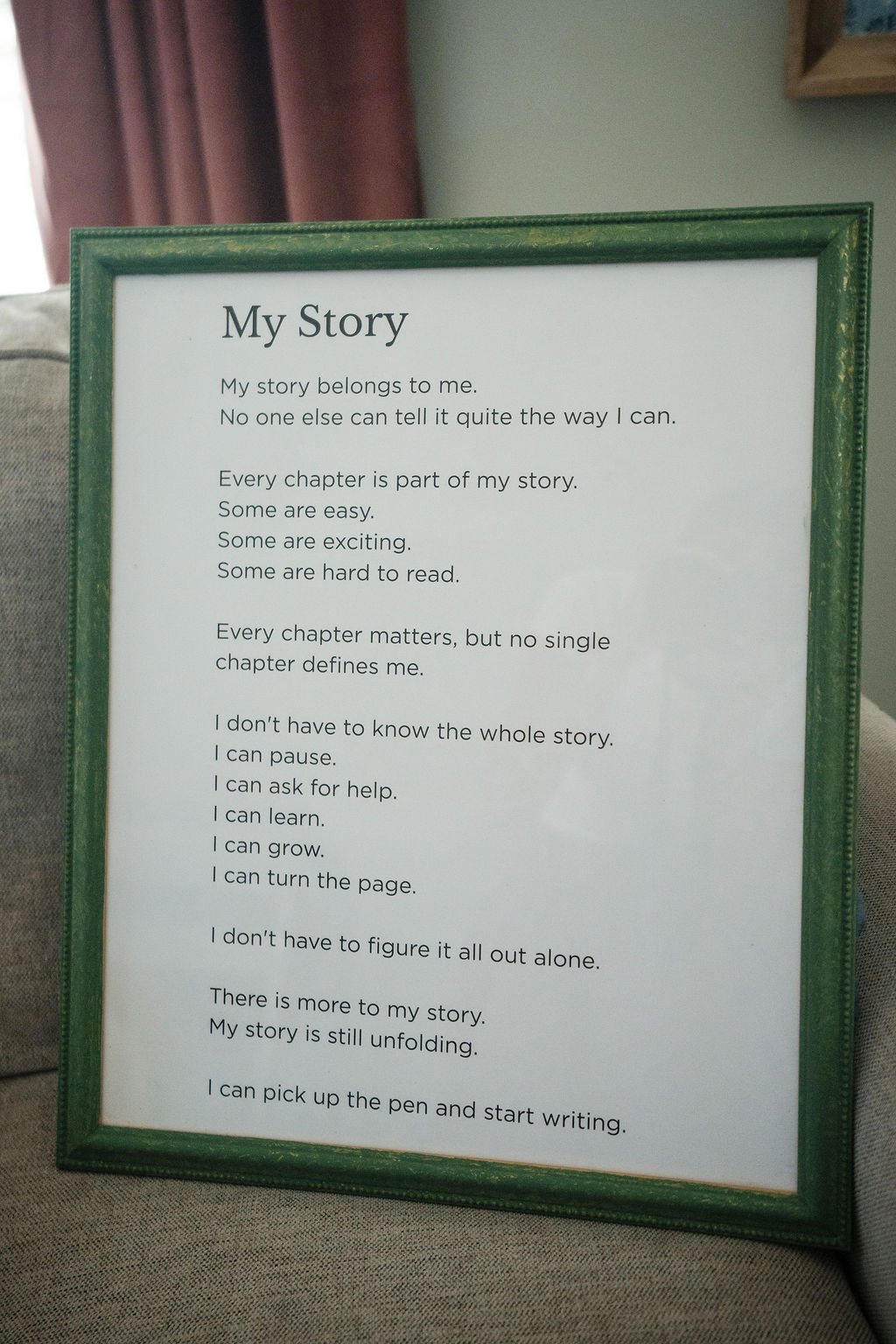
There’s no timeline for grief and no single right way to move through it. Every chapter matters, even the hard ones. Our goal is to walk alongside kids and families as they navigate loss, helping them understand that they don’t have to carry it alone.

The Everyday Challenges of Growing Up
Growing up is complicated.
Between friendships, school pressures, changing family dynamics, and figuring out who they are, kids and teens face more than we sometimes give them credit for.
And not every child who needs support is in crisis. Sometimes parents just know something feels different. Maybe their child has become quieter, gets frustrated more easily, seems less confident, or doesn’t want to talk about things that used to come easily.
Other times, nothing is necessarily wrong. A child might simply benefit from having someone to talk to, help them develop new skills, or work through the challenges that naturally come with growing up.
What this work can do for your family
- Give your child a space that’s just for them. Sometimes kids need a place where they can talk, think, ask questions, and explore feelings without the expectations or pressures of their everyday world.
- Build self-esteem and confidence. We help kids recognize their strengths, work through self-doubt, and develop confidence in who they are and what they’re capable of.
- Navigate friendships and social challenges. Friendships, peer pressure, bullying, disagreements, and the desire to belong can be complicated. We help kids understand these experiences and develop healthier ways of handling relationships.
- Strengthen communication and problem-solving. Learning how to express needs, work through disagreements, make decisions, and handle challenges helps kids build skills they’ll use long beyond childhood.
- Adjust to family changes and life transitions. Divorce, blended families, moving, changing schools, and shifting relationships can all create uncertainty. We help kids understand their feelings and find their footing when life looks different.
- Support teens through adolescence. Growing independence, changing relationships, social pressures, identity, purpose, and self-worth are all part of the teen years. Older kids need space to sort through these experiences too.
- Build organization and everyday life skills. Managing time, getting started on tasks, keeping track of responsibilities, and breaking big projects into manageable steps are all skills that can be learned and strengthened.
- Keep parents involved in the process. You know your child in ways no one else does. Your insight helps us understand what’s happening outside of sessions and find ways to support the progress your child is making.
Every child walks into Storyhouse somewhere in the middle of their story. Some are working through something big. Others are navigating the everyday challenges of growing up. And some just need a little extra support finding their way. Whatever chapter your child is in, we’re here to help them figure out what comes next.
